About Pest Control West Berkshire

Our History
Bee Control West Berkshire
Bees are not something most people want to harm. They are a vital part of the ecosystem and are protected in various ways under UK law. But when a swarm settles in your chimney, a colony establishes itself in a cavity wall, or a nest appears in a busy part of your garden, doing nothing is not always a realistic option.
The right course of action depends entirely on the species. Getting that identification right is the starting point for everything that follows.
Protect Your Property from Bees
Getting Rid of Bee correctly
Identifying the Species
Not all bees are the same, and the treatment approach differs significantly depending on what you are dealing with.
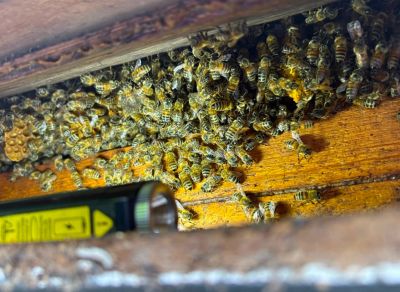
Honeybees are the species most likely to cause structural problems. A honeybee colony is large, can contain tens of thousands of bees, and builds honeycomb that becomes incorporated into the fabric of the building. A swarm of honeybees, which typically appears as a large cluster hanging from a branch or fence post in spring, is not aggressive and will usually move on within a day or two. An established honeybee colony inside a wall or chimney is a more serious matter and requires specialist attention.
Bumblebees are larger and rounder than honeybees, usually with visible yellow and black banding. They nest in smaller colonies of a few hundred at most, often in compost heaps, under decking, in cavity walls, or in loft insulation. Bumblebee nests are seasonal, dying back naturally by late summer. All UK bumblebee species are in decline and are protected. Wherever possible, leaving a bumblebee nest to complete its cycle is the recommended approach.
Solitary bees include mining bees, mason bees, and leafcutter bees. They do not form colonies, do not produce honey, and are not aggressive. They are rarely a problem beyond aesthetics and should be left alone where possible.
The Legal Position
Bees in the UK are not legally protected in the same way as some other species, but the position is more nuanced than many people realise. Honeybees kept by beekeepers are considered property. Wild honeybee swarms are not owned and can be collected by a beekeeper. Bumblebees are a species of conservation concern and should not be disturbed unnecessarily.
The practical implication is that the first call for a honeybee swarm or an accessible honeybee colony is often a local beekeeper, who may be able to collect the bees without the need for pest control treatment. We can advise on the right course of action when you contact us, and we will always tell you honestly if a beekeeper is the better option for your situation.
When Pest Control Is the Right Call
There are situations where pest control is the appropriate response rather than or alongside beekeeper involvement.
Where a honeybee colony has established deep inside a chimney, wall void, or other inaccessible cavity, extraction becomes necessary. Simply killing the colony without removing the honeycomb leaves a significant amount of honey and wax inside the building. In warm weather this can liquefy, causing damage to plaster and attracting other pests. Proper extraction involves opening the structure, removing the colony and all honeycomb, and sealing the cavity afterwards.
Where a bumblebee nest is in a location that presents a genuine risk to people, particularly to children or to anyone with a bee sting allergy, treatment may be considered. This is assessed on a case-by-case basis.
Our Service Area
We cover West Berkshire and the surrounding areas of Wiltshire, including Newbury, Thatcham, Hungerford, Marlborough, Devizes and the villages and rural areas in between. If you are unsure whether we cover your location, call us and we will confirm.
Contact Us
If you have bees in or around your property and you are not sure what you are dealing with or what to do about it, call us. We will ask you a few questions about what you have seen, help identify the species, and advise on the appropriate next step, whether that is watchful waiting, a beekeeper referral, or a visit from us.